Circular Economy in Berlin
Berlin places a high priority on an efficient circular economy combined with sustainable resource management. Many creative people – researchers, technicians, entrepreneurs – are working toward this goal.
Berlin's circular economy is being systematically developed to accelerate the transition from a linear to a circular economic model. The goal is to keep materials in circulation longer, reduce waste, and make the city more resilient to resource shortages, climate impacts, and supply chain risks.
Berlin is expanding its zero-waste strategy through urban real-world laboratories, repair‑ and reuse initiatives, as well as new‑ reuse‑ services offered by BSR, such as the Once Again. Since 2023, the Zero Waste Agency has been helping households and businesses reduce waste and promote circularity. Since 2025, the Senate Administration has been developing a comprehensive circular economy strategythat specifically addresses resource-intensive sectors such as the construction industry. New dialogue formats involve the public, administration and business, accompanying the transformation. The Coordination Office for Circular Economy, Energy Efficiency, and Climate Protection in Business (KEK) supports Berlin-based companies in implementing circular processes, eco-design, and sustainable business models.
Berlin's circular economy is an innovative, forward-looking sector that plays a decisive role in the capital's transition to climate neutrality through strategic planning, strong partnerships, and a clear policy direction.
Facts and figures
- With over 400 companies and well over 8,500 employees, the circular economy is a major economic force in the capital.
- The spectrum ranges from traditional waste management companies and technology developers to startups that use secondary raw materials to create innovative products for an environmentally conscious audience.
- With projects such as ringberlin in Mariendorf, BE-U Behrensufer in Oberschöndeweide, the CleanTech Marzahn, the Impact Hub Berlin in Neukölln, and Berlin TXL - The Urban Tech Republic in Tegel, new locations are emerging that offer ideal conditions for the industry.
- Major disposal companies such as Berliner Stadtreinigungsbetriebe (BSR) and ALBA, along with many specialized recyclers such as Berlin Recycling, ensure a high recycling rate.
- Berlin is developing new urban real-world testing grounds and innovation hubs where circular business models and resource-efficient technologies are tested under real-world conditions.
Why Berlin?
„Berlin is the ideal location for Concular, since here at the Impact Hub we are part of a strong, future‑oriented ecosystem. A key advantage is our close proximity to policymakers at the state and federal levels, which helps us actively shape the circular economy. In addition, we benefit greatly from the strong support provided by Berlin Partner and the excellent access to motivated skilled workers. This unique combination of political proximity, a strong network, and top-tier talent makes Berlin indispensable to our mission.“
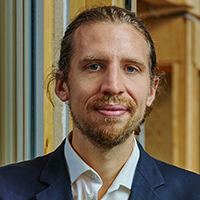
Photo: @Dominik_Campanella
Interdisciplinary research
- TU Berlin - Faculty III / Process Sciences
Research on resource-efficient processes, sustainable product development, and circular value chains; the Department of Circular Economy and Recycling Technology
identifies, quantifies, and characterizes the fate of solid resources and raw materials in society and the environment, and develops and optimizes circular technologies - TU Berlin - Circular Economy Hub Berlin
A central platform for strategies, tools, and best practices in the industrial circular economy; supports companies in knowledge transfer - Berlin University of Applied Sciences - A B Circular
Development of toolkits and urban real-world laboratories to promote circular production models “Made in Berlin,” with a focus on design, fashion, architecture, and construction - Fraunhofer Institute for Production Systems and Design Technology IPK
Development of novel biopolymers and corresponding processing and manufacturing technologies
Circular Economy in Berlin
Over the past few years, Berlin has become a testing ground for the circular economy. The city has committed to pursuing the path toward becoming a Zero Waste City Berlin. It is supported in this effort by a wide range of initiatives and programs that offer both businesses and civil society opportunities and solutions for preventing waste or, at the very least, integrating it effectively into new circular systems:
- Coordination Office for Circular Economy, Energy Efficiency, and Climate Protection in Business (KEK)
- Zero Waste Agency
- circular.Berlin Network
- Circular Economy Hub Berlin
- A-B Circular
These initiatives strengthen Berlin’s position as an innovation hub for the circular economy and contribute to the transformation of urban value chains – from product development and material use to reuse and repair.